
CASE STUDY
Telefónica
Telefónica's digital ecosystem consists of numerous products serving different business units, markets, and user needs. As the ecosystem expanded, maintaining consistency across interfaces became increasingly difficult, leading to duplicated effort, fragmented user experiences, and inconsistent implementation across teams.
As part of the Design Systems team, I contributed to building a centralized design system that could support multiple products while maintaining a consistent design language. Rather than creating a traditional UI component library, we developed a unified platform combining design foundations, design tokens, reusable components, documentation, and governance practices that strengthened collaboration between design and engineering.
The result was a scalable design system that streamlined product development, improved consistency across teams, and established a strong foundation for future digital experiences.
Role
UI Designer
Design System Contributor
Industry
Telecom
ECommerce
Tools
Figma
Design Systems
UI/UX
Web/App Design
Prototyping
Live
Telefónica
I contributed to the evolution of Telefónica's enterprise design system, helping create a scalable foundation for multiple digital products across the organization. Working closely with designers, engineers, and stakeholders, I focused on designing reusable components, improving design consistency, strengthening documentation, and creating scalable design patterns that accelerated product development while ensuring a cohesive user experience. |
Brands Associated with Telefonica Design System

User Problem
As different product teams evolved independently, users encountered inconsistent interfaces, navigation patterns, layouts, and interaction behaviors across Telefónica's digital products. Although these products belonged to the same ecosystem, the overall experience often felt disconnected, making it harder for users to build familiarity and confidence while moving between applications.
Designers frequently recreated similar interface patterns, while engineers implemented different versions of the same components, leading to unnecessary inconsistencies and increased maintenance effort.
Business Problem
As Telefónica's product ecosystem continued to grow, maintaining consistency across products became increasingly challenging.
Without a centralized design system:
Design and engineering efforts were duplicated across teams.
Product experiences lacked visual and interaction consistency.
Development cycles slowed because common UI patterns were repeatedly recreated.
Accessibility standards varied between products.
Onboarding new designers and engineers required additional time.
Scaling the ecosystem became increasingly difficult.
The organization required a shared design foundation that could standardize common experiences while remaining flexible enough to support different product requirements.
Constraints
Support multiple digital products with varying business and user requirements.
Maintain consistency while allowing flexibility for product-specific needs.
Enable incremental adoption without disrupting existing products.
Create reusable assets consumable by multiple engineering teams.
Ensure accessibility and responsive behavior across the ecosystem.
Build a scalable foundation capable of evolving alongside future business requirements.
Discovery & Research
As part of the Design Systems team, I participated in auditing existing products across the Telefónica ecosystem to identify recurring UI patterns, inconsistencies, accessibility gaps, and opportunities for standardization.
The team analyzed components, layouts, navigation systems, typography, spacing, and interaction behaviors used across different products. Through this process, we discovered that many inconsistencies were not caused by branding differences but by individual teams independently solving similar design challenges.
Working closely with designers, engineers, and stakeholders, we identified opportunities to establish shared foundations and reusable patterns that could improve consistency while supporting product-specific requirements.
These insights shaped the architecture of the design system and influenced the creation of scalable design foundations that could be adopted across the organization.
Design Process
1. Contributing to Design Foundations
One of my key contributions was helping establish the foundational elements of the design system that every product could build upon.
These included:
Typography
Color system
Spacing scale
Grid system
Border radius
Elevation
Responsive breakpoints
Iconography
Motion principles
Building these foundations first ensured greater consistency while simplifying long-term maintenance across products.
2. Building a Scalable Design Architecture
I contributed to developing a layered architecture that separated shared design foundations from product-specific customization.
The architecture consisted of:
Design Tokens
Design Foundations
Reusable Components
Product-Level Implementations
This structure enabled products to share consistent interaction patterns while remaining flexible enough to support evolving business requirements.
3. Designing Reusable Components
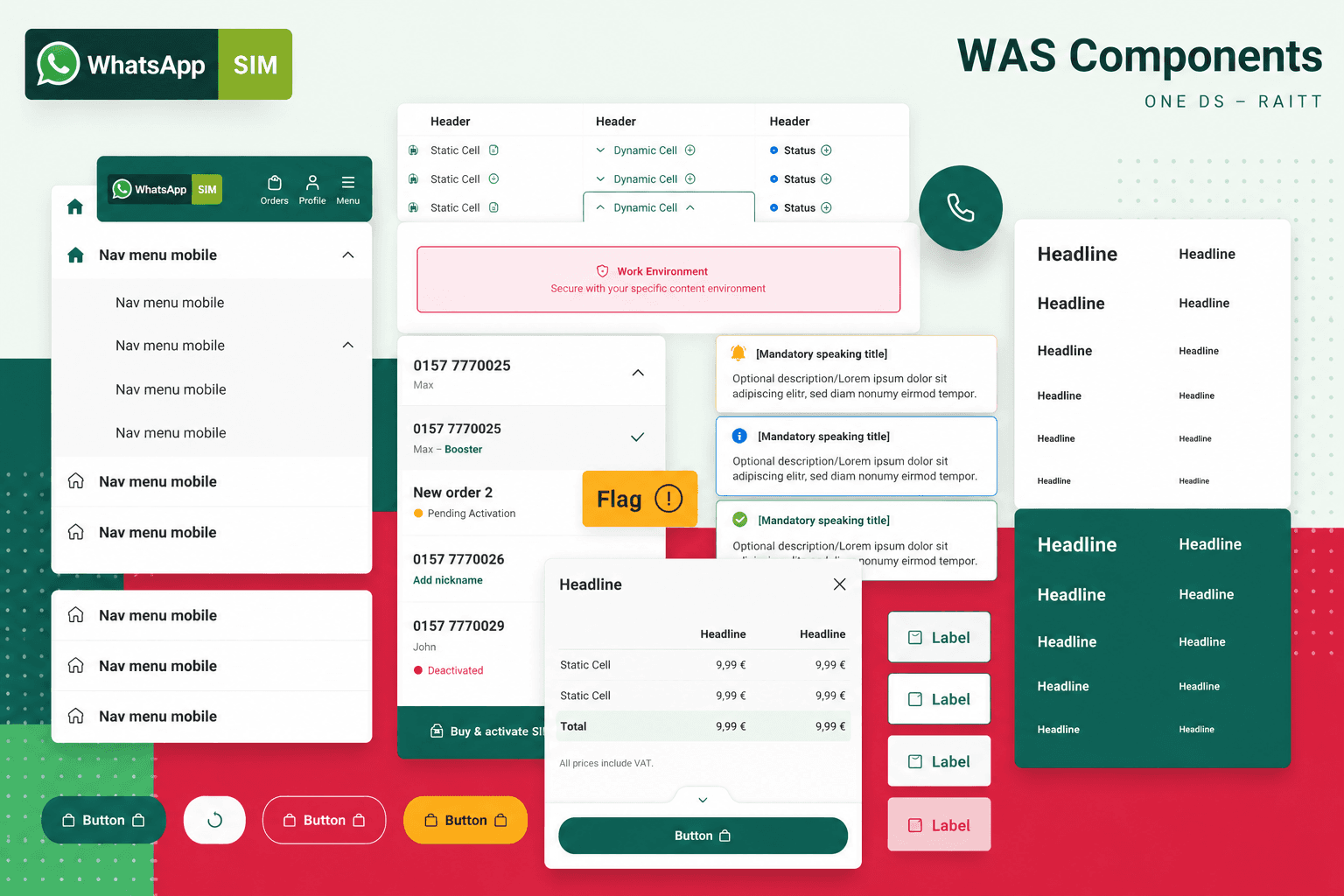
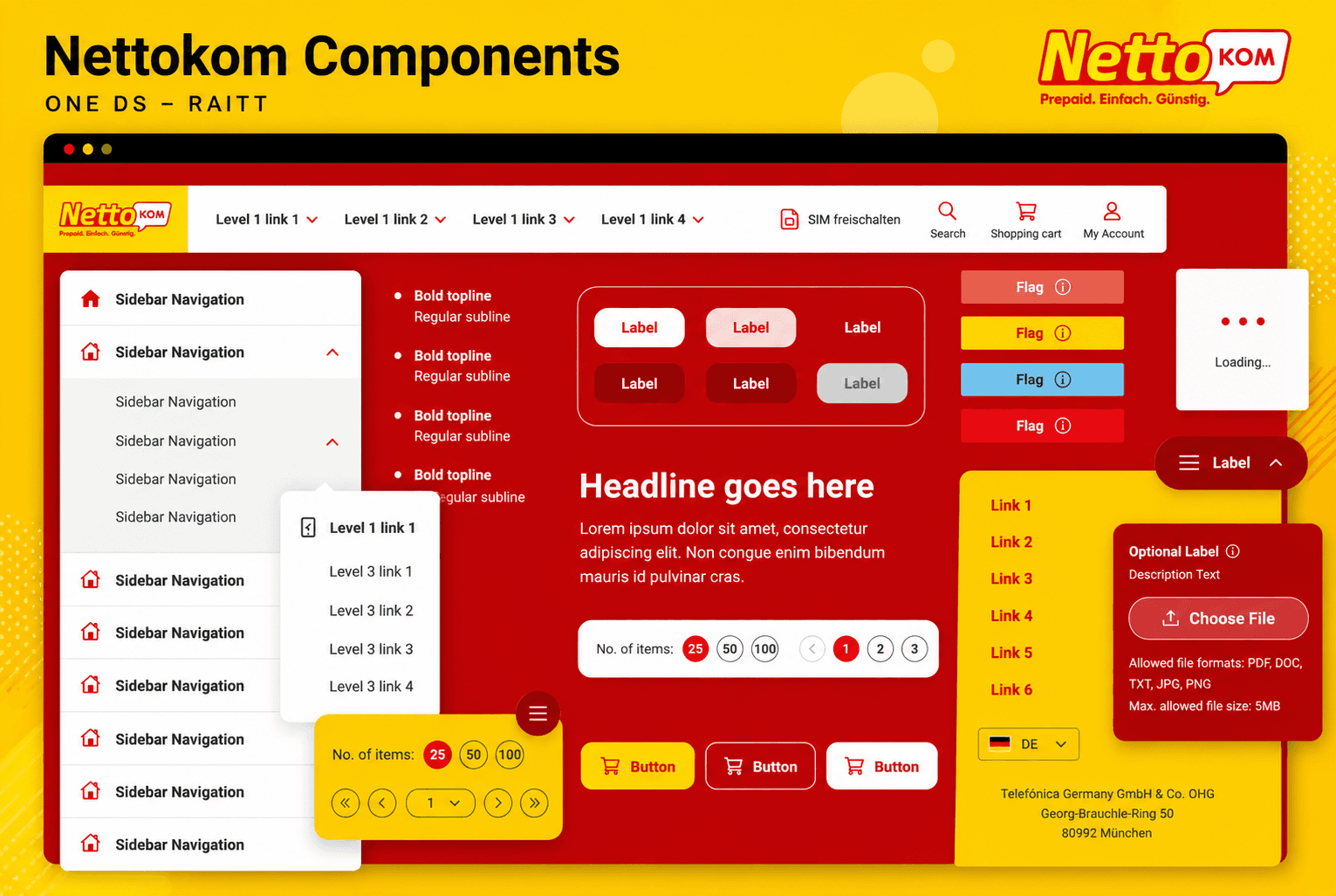
I designed and refined reusable components used throughout the product ecosystem, including:
Navigation
Forms
Buttons
Inputs
Tables
Cards
Feedback components
Layout containers
Content patterns
Each component was designed with multiple interaction states, responsive behavior, accessibility considerations, and implementation consistency to ensure usability across different products.
4. Documentation & Adoption
Alongside component development, I contributed to documentation that helped product teams understand how and when to use the design system effectively.
The documentation included:
Design foundations
Component usage guidelines
Accessibility recommendations
Responsive behavior
Best practices
Implementation guidance
Providing comprehensive documentation reduced ambiguity and encouraged consistent adoption across design and engineering teams.
5. Cross-functional Collaboration
A significant part of my role involved collaborating closely with product managers, designers, engineers, and stakeholders throughout the design process.
Regular design reviews, implementation discussions, and feedback sessions helped ensure that design decisions aligned with both user needs and technical requirements while keeping the system scalable for future growth.
Key Decisions & Tradeoffs
Shared Foundations Before Components
Rather than allowing each product team to build independent component libraries, we prioritized establishing a shared foundation that every product could inherit.
Tradeoff
Creating common standards required additional collaboration and alignment across multiple teams during the early stages of the project.
Benefit
The shared foundation reduced duplication, improved consistency, and made future system expansion significantly easier.
Balancing Consistency with Flexibility
One of the biggest challenges was creating a system that standardized common interaction patterns without restricting individual product requirements.
Instead of enforcing rigid consistency, we built reusable foundations that allowed products to remain flexible while preserving a unified user experience.
Documentation as Part of the Product
Documentation was treated as an essential part of the design system rather than a supporting deliverable.
Every component included guidance explaining:
Why it exists
When to use it
When not to use it
Accessibility considerations
Implementation guidance
This improved adoption and reduced uncertainty during implementation.
Outcomes
Contributed to the evolution of Telefónica's enterprise design system supporting multiple digital products across the organization.
Helped establish standardized design foundations, including typography, spacing, color, grids, accessibility guidelines, and interaction patterns.
Designed reusable components that improved consistency across products and reduced repetitive design effort.
Collaborated closely with engineering teams to strengthen design-to-development consistency through shared components and documentation.
Contributed to documentation and governance practices that supported broader adoption of the design system.
Helped build a scalable design foundation that enables future products to leverage shared patterns instead of recreating common UI solutions.
What I'd Do Differently
Looking back, I would introduce stronger adoption metrics earlier in the design system's evolution.
While the team focused on building high-quality components and documentation, measuring how teams adopted the system over time would have provided valuable insights into component usage, migration progress, and areas requiring further improvement.
A design system delivers its greatest value when it becomes an integral part of an organization's workflow. Establishing clearer success metrics from the beginning would have helped prioritize future iterations based on real adoption patterns and continuous feedback from product teams.


CASE STUDY
Telefónica
Telefónica's digital ecosystem consists of numerous products serving different business units, markets, and user needs. As the ecosystem expanded, maintaining consistency across interfaces became increasingly difficult, leading to duplicated effort, fragmented user experiences, and inconsistent implementation across teams.
As part of the Design Systems team, I contributed to building a centralized design system that could support multiple products while maintaining a consistent design language. Rather than creating a traditional UI component library, we developed a unified platform combining design foundations, design tokens, reusable components, documentation, and governance practices that strengthened collaboration between design and engineering.
The result was a scalable design system that streamlined product development, improved consistency across teams, and established a strong foundation for future digital experiences.
Role
UI Designer
Design System Contributor
Industry
Telecom
ECommerce
Tools
Figma
Design Systems
UI/UX
Web/App Design
Prototyping
Live
Telefónica
I contributed to the evolution of Telefónica's enterprise design system, helping create a scalable foundation for multiple digital products across the organization. Working closely with designers, engineers, and stakeholders, I focused on designing reusable components, improving design consistency, strengthening documentation, and creating scalable design patterns that accelerated product development while ensuring a cohesive user experience. |
Brands Associated with Telefonica Design System
User Problem
As different product teams evolved independently, users encountered inconsistent interfaces, navigation patterns, layouts, and interaction behaviors across Telefónica's digital products. Although these products belonged to the same ecosystem, the overall experience often felt disconnected, making it harder for users to build familiarity and confidence while moving between applications.
Designers frequently recreated similar interface patterns, while engineers implemented different versions of the same components, leading to unnecessary inconsistencies and increased maintenance effort.
Business Problem
As Telefónica's product ecosystem continued to grow, maintaining consistency across products became increasingly challenging.
Without a centralized design system:
Design and engineering efforts were duplicated across teams.
Product experiences lacked visual and interaction consistency.
Development cycles slowed because common UI patterns were repeatedly recreated.
Accessibility standards varied between products.
Onboarding new designers and engineers required additional time.
Scaling the ecosystem became increasingly difficult.
The organization required a shared design foundation that could standardize common experiences while remaining flexible enough to support different product requirements.
Constraints
Support multiple digital products with varying business and user requirements.
Maintain consistency while allowing flexibility for product-specific needs.
Enable incremental adoption without disrupting existing products.
Create reusable assets consumable by multiple engineering teams.
Ensure accessibility and responsive behavior across the ecosystem.
Build a scalable foundation capable of evolving alongside future business requirements.
Discovery & Research
As part of the Design Systems team, I participated in auditing existing products across the Telefónica ecosystem to identify recurring UI patterns, inconsistencies, accessibility gaps, and opportunities for standardization.
The team analyzed components, layouts, navigation systems, typography, spacing, and interaction behaviors used across different products. Through this process, we discovered that many inconsistencies were not caused by branding differences but by individual teams independently solving similar design challenges.
Working closely with designers, engineers, and stakeholders, we identified opportunities to establish shared foundations and reusable patterns that could improve consistency while supporting product-specific requirements.
These insights shaped the architecture of the design system and influenced the creation of scalable design foundations that could be adopted across the organization.
Design Process
1. Contributing to Design Foundations
One of my key contributions was helping establish the foundational elements of the design system that every product could build upon.
These included:
Typography
Color system
Spacing scale
Grid system
Border radius
Elevation
Responsive breakpoints
Iconography
Motion principles
Building these foundations first ensured greater consistency while simplifying long-term maintenance across products.
2. Building a Scalable Design Architecture
I contributed to developing a layered architecture that separated shared design foundations from product-specific customization.
The architecture consisted of:
Design Tokens
Design Foundations
Reusable Components
Product-Level Implementations
This structure enabled products to share consistent interaction patterns while remaining flexible enough to support evolving business requirements.
3. Designing Reusable Components
I designed and refined reusable components used throughout the product ecosystem, including:
Navigation
Forms
Buttons
Inputs
Tables
Cards
Feedback components
Layout containers
Content patterns
Each component was designed with multiple interaction states, responsive behavior, accessibility considerations, and implementation consistency to ensure usability across different products.
4. Documentation & Adoption
Alongside component development, I contributed to documentation that helped product teams understand how and when to use the design system effectively.
The documentation included:
Design foundations
Component usage guidelines
Accessibility recommendations
Responsive behavior
Best practices
Implementation guidance
Providing comprehensive documentation reduced ambiguity and encouraged consistent adoption across design and engineering teams.
5. Cross-functional Collaboration
A significant part of my role involved collaborating closely with product managers, designers, engineers, and stakeholders throughout the design process.
Regular design reviews, implementation discussions, and feedback sessions helped ensure that design decisions aligned with both user needs and technical requirements while keeping the system scalable for future growth.
Key Decisions & Tradeoffs
Shared Foundations Before Components
Rather than allowing each product team to build independent component libraries, we prioritized establishing a shared foundation that every product could inherit.
Tradeoff
Creating common standards required additional collaboration and alignment across multiple teams during the early stages of the project.
Benefit
The shared foundation reduced duplication, improved consistency, and made future system expansion significantly easier.
Balancing Consistency with Flexibility
One of the biggest challenges was creating a system that standardized common interaction patterns without restricting individual product requirements.
Instead of enforcing rigid consistency, we built reusable foundations that allowed products to remain flexible while preserving a unified user experience.
Documentation as Part of the Product
Documentation was treated as an essential part of the design system rather than a supporting deliverable.
Every component included guidance explaining:
Why it exists
When to use it
When not to use it
Accessibility considerations
Implementation guidance
This improved adoption and reduced uncertainty during implementation.
Outcomes
Contributed to the evolution of Telefónica's enterprise design system supporting multiple digital products across the organization.
Helped establish standardized design foundations, including typography, spacing, color, grids, accessibility guidelines, and interaction patterns.
Designed reusable components that improved consistency across products and reduced repetitive design effort.
Collaborated closely with engineering teams to strengthen design-to-development consistency through shared components and documentation.
Contributed to documentation and governance practices that supported broader adoption of the design system.
Helped build a scalable design foundation that enables future products to leverage shared patterns instead of recreating common UI solutions.
What I'd Do Differently
Looking back, I would introduce stronger adoption metrics earlier in the design system's evolution.
While the team focused on building high-quality components and documentation, measuring how teams adopted the system over time would have provided valuable insights into component usage, migration progress, and areas requiring further improvement.
A design system delivers its greatest value when it becomes an integral part of an organization's workflow. Establishing clearer success metrics from the beginning would have helped prioritize future iterations based on real adoption patterns and continuous feedback from product teams.